
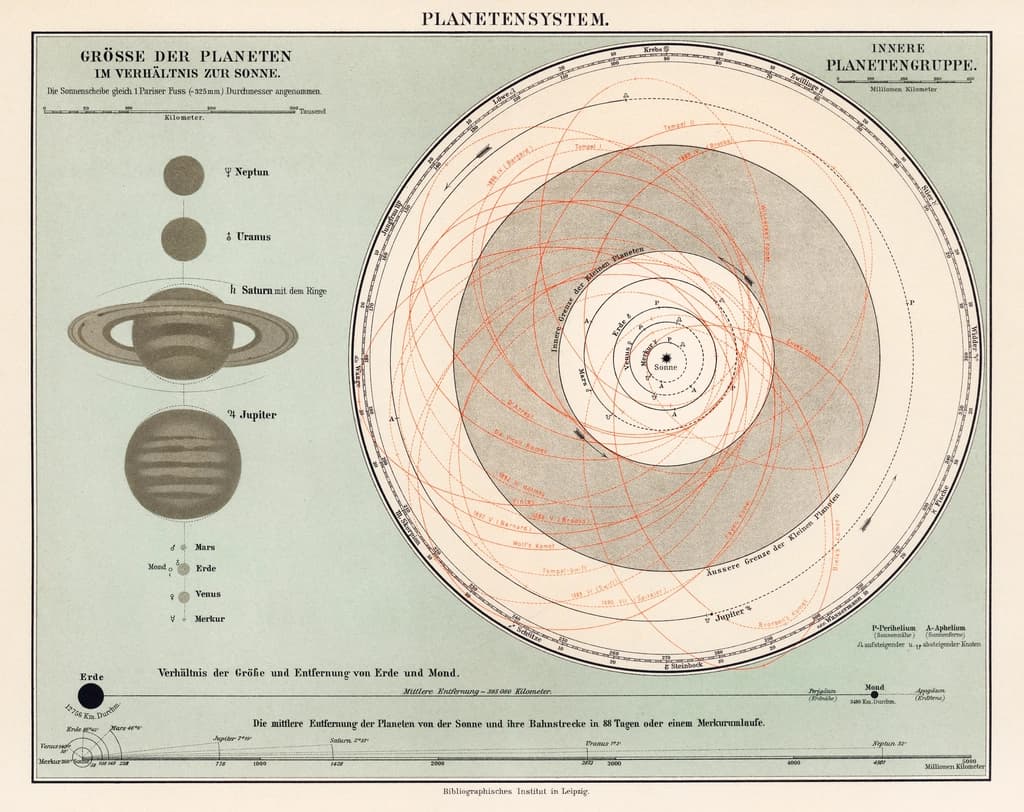
Bibliographisches Institut, Leipzig, 1898
🌙 The Moon - Mind, Emotion, and Nourishment
The Moon, Nakshatras, and Vimshottari Dasha
How the birth nakshatra of the Moon determines the entire Vimshottari Dasha sequence.
The Moon as the Key to Your Dasha
No other planet plays as structural a role as the Moon in Vedic timing. The entire Vimshottari Dasha system is anchored to the Janma Nakshatra - the nakshatra occupied by the Moon at birth.
How the Dasha Sequence Is Determined
- 1Identify which nakshatra the Moon occupies at birth
- 2The nakshatra's ruling planet gives the first Mahadasha
- 3The remaining proportion of that dasha is determined by how far into the nakshatra the Moon has traveled
- 4The remaining dashas follow the fixed Vimshottari sequence
Vimshottari sequence: Ketu 7 - Venus 20 - Sun 6 - Moon 10 - Mars 7 - Rahu 18 - Jupiter 16 - Saturn 19 - Mercury 17 (total 120 years)
- Ashwini, Magha, Mula: Ketu
- Bharani, Purva Phalguni, Purva Ashadha: Venus
- Krittika, Uttara Phalguni, Uttara Ashadha: Sun
- Rohini, Hasta, Shravana: Moon
- Mrigashira, Chitra, Dhanishta: Mars
- Ardra, Swati, Shatabhisha: Rahu
- Punarvasu, Vishakha, Purva Bhadrapada: Jupiter
- Pushya, Anuradha, Uttara Bhadrapada: Saturn
- Ashlesha, Jyeshtha, Revati: Mercury
Paksha Bala - Lunar Phase Strength
- Full Moon: maximum strength
- New Moon: minimum strength
- A Moon within 12 degrees of the Sun is considered very weak regardless of sign placement
- Moon between 72 and 108 degrees from the Sun (roughly first and third quarter) is moderate
Practical rule: A chart with a Moon that is waxing, past the first quarter, and well-placed in sign gives the native a naturally stable emotional foundation.
Your Janma Nakshatra - the nakshatra occupied by the Moon at birth - determines your entire Vimshottari Dasha sequence and its starting point.
Module 2 Quiz: The Moon
Finish all 5 lessons in this module to unlock
Up next
Moon Dignity - Exaltation, Own Sign, and Debilitation