
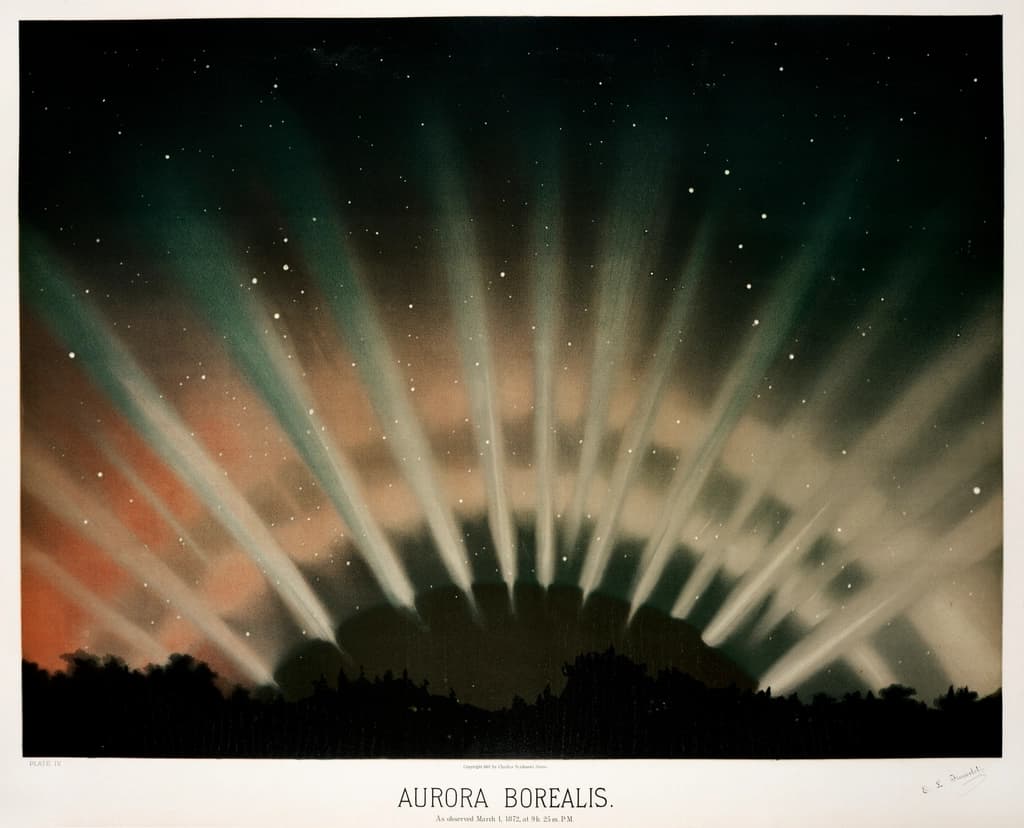
E. L. Trouvelot, 1872
📅 The Panchang
Sky Times - Sunrise, Sunset, Moonrise, Moonset
Why the four sky timings matter and how they anchor everything else in the day.
The four sky timings shown in your Today reading - sunrise, sunset, moonrise, and moonset - are not decorative. They are the anchor points from which the entire day's timing structure is computed.
This is why AstroPal asks you to choose a city in your Today reading: the Panchang is computed for your city's coordinates, not a generic Indian average.
SUNRISE - THE PRIMARY ANCHOR
- The 12 hours from sunrise to sunset are divided into 8 equal parts
- Each of the 8 parts (called "Horas" or time slots) is assigned to a planet
- Rahu Kaal, Yamaganda, and Gulika Kaal are specific Horas in this sequence
SUNSET - THE BOUNDARY
The time between sunrise and sunset (the solar day) is the window for most auspicious activities. After sunset, the lunar timings (moonrise, moonset) become more relevant for practice and contemplation.
MOONRISE AND MOONSET
- Meditation or prayer with moonrise or moonset
- Fasts with specific lunar timings (e.g., ending an Ekadashi fast at moonrise on Dwadashi)
- Offering water (Jal Daan) to the Moon at moonrise
BRAHMA MUHURAT - THE HOUR BEFORE SUNRISE
- Prayer and meditation
- Study and reading
- Planning and quiet reflection
- Any activity requiring mental clarity and focus
Sunrise is the anchor for the entire day's Panchang. Every muhurat window is calculated relative to sunrise for your specific city.
Panchang Foundations Quiz
Finish all 4 lessons in this module to unlock
Up next
Understanding Tithis - The Lunar Calendar